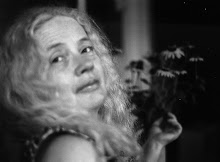
Kathy Freeperson - poet, performance artist, radical feminist, activist, all around troublemaker - was my dear friend and writing partner for ten years. In 1992 we wrote and directed an evening of performance art, called BODY, MIND AND SPIRIT, that was so kick-ass wonderful women drove 200 miles to see it, and we filled the theater every night for a three-weekend run. We were then invited to perform it on the main stage at Florida State University in Tallahassee. At the end of the show, the audience rushed the stage. Poets don't often get to feel like rockstars - that was our night!
Shortly thereafter we were invited by the Women's Studies Department at FSU to give a Saturday afternoon poetry workshop, for which we would be paid $75 apiece. When it came to poetry, Kathy and I were easy lays - we would go almost anywhere for $75.
Kathy had many wonderful qualities, but when it came to money she was cheaper than Holloween candy on the Fourth of July. No one ever came out on top in a financial transaction with Freep (as she was called). So when I learned that our money would come in the form of a $150 check made out and mailed to Kathy, I could see that even on my economic scale, this was not going to be a profitable venture.
We worked out the finances of going up to Tallahasse. We would split the gas and motel bill evenly. Since I don't drive Kathy would have to do all the driving. In return I would pick up the restaurant tabs. Kathy ate often and she ate hearty, so this was going to be no small outlay.
We were accompanied by Kathy's 18-year-old toy poodle, Angelina Grimke, who was blind, arthritic, and farted incessantly. Kathy insisted that Angelina ride on my lap the whole trip there and back - to keep her safe and because, as she explained to Angelina who kept attempting to hobble into the back seat, "Your Aunt Arupa loves you SO MUCH."
It takes the state of Florida a long time to get around to paying people, so Kathy got our $150 check about three months later. She came over and gave me $20, explaining that "I had to pays some bills, and I'll get the rest to you later." Two months later she dropped by and gave another 20 dollars. I said that getting the money this way was taking some of the ya yas out of getting 'magic poetry money', as we called it. Kathy sniffed and said, "Unlike me, you are a married woman receiving the benefits of white male privilege so you should have no complaints." Okay.
A few months after that Kathy came by and gave me a Kodak envelope. She said it contained copies of all the pictures she had taken on the trip and should be more than equivalent to the 35 dollars she owed me. Whatever. I took the pictures. Later on I opened the envelope to find two pictures of me, two pictures of Kathy, and sixteen pictures of Angelina Grimke. I muttered, "**** you Freep!" and stuffed them into the back of a desk drawer.
In 2002 Kathy died of complications from diabetes. I was with her when she died. I knew from one of her poems what song her mother always sang to her when she was
falling asleep, so I held her hand and sang, "You are My Sunshine" as she drifted peacefully out of this world.
Several years later, when the whole episode of our trip to Tallahasse was long forgotten, I was cleaning out my old desk and found the 16 pictures of Angelina Grimke. The years fell away and I was remembering my beloved Freep and all the times we had - nothing could have brought it all back more than these pictures! I was so glad that she hadn't paid me with pieces of paper I would have taken to the store and traded for toilet paper and cat food. What is that worth? Sixteen pictures of Angelina Grimke turned out to be priceless.
Love you, Kathy.
Friday, January 27, 2012


Monday, January 23, 2012
God of the Magic Hair Brush
I found that day, broke,
my hair so thick and curly
I'd have to cut it off my head,
still in its plastic case,
a new hair brush to replace
the one I lost.
'I won't replace all you lost,
your mother, father, sister,
gone forever,
but here's a new hair brush
just so you'll know I'm here,
as you walk the long, long road.'
'To streets of gold?
really.
'Now I'm old,
I've walked another forty years
on the long, long road.
I need another hair brush,
soon.'
my hair so thick and curly
I'd have to cut it off my head,
still in its plastic case,
a new hair brush to replace
the one I lost.
'I won't replace all you lost,
your mother, father, sister,
gone forever,
but here's a new hair brush
just so you'll know I'm here,
as you walk the long, long road.'
'To streets of gold?
really.
'Now I'm old,
I've walked another forty years
on the long, long road.
I need another hair brush,
soon.'
Wednesday, November 2, 2011
THE GREAT FIMO EPIDEMIC OF 1976
Fimo is a form of clay that is used by architects to build models. In art supply stores it is sold in brightly colored squares. Fimo is very pliable and can be baked in home ovens. It is perfect for making miniatures. In 1976, at McGraw-Hill, none of us had heard of Fimo until one day Helen walked into the employees lounge wearing large fruit basket earrings that were the most remarkable items most of us had ever seen hanging from a human ear, except in illustrations in National Geographic. They were perfectly made and shiny. With these earrings you could get a job in the chorus line of South Pacific. Helen announced that she had made these earrings herself. That was pretty hard to believe. Helen spent her spare time going through catalogues and ordering Stale Cracker Refreshers and soap dishes that play Edeilweiss. If she could do this!
That weekend found most of us at the art supply store buying Fimo. Fimo turned into an obsession. It even reached the point that an informal support group of Fimo widowers formed - men who had been living on TV dinners and spending lonely evenings watching TV with Mr. Hand, for months and months. I would overhear them in the lounge,
"She comes home from work and walks straight to the Fimo table."
"I woke up at 4 a.m. and she was at the Fimo table."
I began to moonlight for a dollhouse store, I made little plates of bacon and eggs or hamburger and fries and fruit bowls, mainly. Then I got an order to make 45 dogs, each one a recognizable breed. I had minus zero qualifications for this task. I sweated like a pregnant wart hog trying to make a banana that actually looked like a banana. So of course I said, "Yes,no problem, when do you want them?"
I had a month. I checked dog books out of the library and spent every waking moment I wasn't at work - unto the wee small hours of the morning - on this project. Dalmations. Russian Wolf Hounds, Jack Russell Terriors... Every moment I had to be outside I studied each passing dog. Months after the dog order was completed, I'd see a dog and my first thought would be, "He's scratching his ear at a 45 degree angle."
A week or two into this dog project I began to feel poorly. I was living on crackers and getting 4 hours of sleep a night. So I devised a special diet that could be prepared in advance and that would include an item from each category in the Food Pyramid.
FIMO DIP: Sour cream (dairy), bacon bits (meat), canned peas (green vegetable), dried onion soup mix (salad?)served with potato chips (starch), and peanut M&Ms (nut).
I actually finished this order, to the satisfaction of the shop owner and got my five cents an hour. It was, for me, what alcoholics call, "Hitting bottom." My Fimo obsession tapered off, as it did for my fellow addicts. To this day I have a few squares of Fimo in my scrap box, and once in a blue moon I make a hot dog or an apple.
That weekend found most of us at the art supply store buying Fimo. Fimo turned into an obsession. It even reached the point that an informal support group of Fimo widowers formed - men who had been living on TV dinners and spending lonely evenings watching TV with Mr. Hand, for months and months. I would overhear them in the lounge,
"She comes home from work and walks straight to the Fimo table."
"I woke up at 4 a.m. and she was at the Fimo table."
I began to moonlight for a dollhouse store, I made little plates of bacon and eggs or hamburger and fries and fruit bowls, mainly. Then I got an order to make 45 dogs, each one a recognizable breed. I had minus zero qualifications for this task. I sweated like a pregnant wart hog trying to make a banana that actually looked like a banana. So of course I said, "Yes,no problem, when do you want them?"
I had a month. I checked dog books out of the library and spent every waking moment I wasn't at work - unto the wee small hours of the morning - on this project. Dalmations. Russian Wolf Hounds, Jack Russell Terriors... Every moment I had to be outside I studied each passing dog. Months after the dog order was completed, I'd see a dog and my first thought would be, "He's scratching his ear at a 45 degree angle."
A week or two into this dog project I began to feel poorly. I was living on crackers and getting 4 hours of sleep a night. So I devised a special diet that could be prepared in advance and that would include an item from each category in the Food Pyramid.
FIMO DIP: Sour cream (dairy), bacon bits (meat), canned peas (green vegetable), dried onion soup mix (salad?)served with potato chips (starch), and peanut M&Ms (nut).
I actually finished this order, to the satisfaction of the shop owner and got my five cents an hour. It was, for me, what alcoholics call, "Hitting bottom." My Fimo obsession tapered off, as it did for my fellow addicts. To this day I have a few squares of Fimo in my scrap box, and once in a blue moon I make a hot dog or an apple.
Sunday, October 30, 2011
MY EXPERIENCES WITH BANKING AND THE CAPITALIST SYSTEM: A PERSONAL MEMOIR
The Occupy Wall Street Movement and the plight of those who are watching their 401Ks (whatever they are) disppear into the maw of the one percent, have brought to mind my own memories of participation in capitalist America. They began early.
My mother gave birth to me nine months and one day after her 18th birthday. My father, whatever his sins may have been, did not engage in conception with an underage female. My mother was not prepared to be a parent. My parents had me call them Edith and Bill, and that is what they were, an Edith and a Bill. Edith struggled with parenthood, with a spectacular lack of success (that is another story) until Bill dumped us. I was three at the time. She left me in Vermont where I ended up living with my grandmother. My grandmother was less than thrilled. Nevertheless, she took up this role of caretaker with a grim and Vermontish determination to do it right.
For my sixth birthday I received several greeting cards, from friends of the family, that each contained a dollar bill. Visions of ice cream cones and barrettes danced in my head, until my grandmother announced that it was time for me to learn thrift and the value of money. She took me to the local bank and opened a savings account for me, with these dollar bills. She was the co-signer on the account, due to my extreme youth. I stood in the cavernous, Dickensian lobby of the bank and watched my birthday money disppear, to be replaced by a small ledger book, with my deposit recorded by hand. The bank manager came out from behind the massive mahogany counter and shook my hand. He welcomed me to the family of depositors at the First National Bank of North Bennington, Vermont and gave me a short lecture on the importance of saving money for one's future.
On a happier note, she also opened a Christmas Club for me, which I was to pay into at the rate of fifty cents a month, money that I could earn by doing extra chores. The following November I would receive $12 to spend on buying Christmas presents. I thought this was cool. The happiest day of the year at our house was the day we went to the nearby metropolis of Bennington and did our Christmas shopping, at Woolworths, which had a vast array - a Sultan's treasury - of fabulous gifts that could be purchased for five and ten cents apiece. Twelve dollars was a fortune and I was able to amaze my friends and relatives with little glass animals, a ceramic rooster, hair bands, and once some very cute little glasses with people dancing on them, that I bought for my grandmother. They were shot glasses. My teetolling grandmother had years and years of fun telling the story of how she received a set of shot glasses from me when I was in the third grade. Christmas shopping day was also the one day of the year that we ate at a restaurant, always the same one - The Green Mountain Diner - where we would have a hot turkey sandwich and a piece of apple pie. This was our yearly glimpse into lifestyles of the rich and famous, and we both savored every moment of it.
As the years rolled by, she continued to deposit my Christmas and birthday money into the savings account, and to show me the little book that slowly grew until, when I was a senior in high school, I had almost three-hundred dollars. It was in April of my senior year that my personal 1K (as opposed to 401K) bit the dust. I came home from school and walked in to find my grandmother smiling from ear to ear as she gazed down on a long-held dream come true - a brand new vacuum cleaner. She had closed out my account and bought a vacuum cleaner and a few other incidentals. She was ecstatic!
My reaction at the time was a kind of weary, "whatever." The money had never seemed like mine anyhow. In retrospect, I am able to be even more forgiving. My grandmother had known very little in her life but hard work and deprivation. She grew up working on her father's farm. When she was 16 her father sold her to a French Canadian logger who walked down to Vermont looking for a wife. When she was 17 she had her first baby. Her husband turned out to be a hopeless alcoholic and she spent the rest of her life working and raising children. She really wanted that vaccuum cleaner and by God she saw a chance to get it and got it she did! Good for you, Gramma, wherever you are. You were right - I was young and I had a better shot at life than you ever did. I didn't need the three hundred dollars.
The day after I graduated from high school she put me on a plane bound for Oklahoma City, where Edith had been living all those years. She had re-married and produced two more children. I was to spend the summer with her and then start life at the University of Oklahoma. Despite the demise of my savings account, I had money with me, $400 I had earned writing the best essay on "Why I Want to Be a Vermont Tree Farmer." This essay contest was sponsored by the Vermont Tree Farmers Association and was open to all Vermont high school seniors. I had no desire whatsover to become a tree farmer but I did know that I had a talent for writing and to heck with the poor sods that actually wanted to become tree farmers.
I graduated from high school on a Saturday night, boarded the plane on Sunday morning, and arrived in Oklahoma City Sunday night. Edith, who was the manager of Manpower Inc., a temp agency, gave me the glad tidings that I had a job, beginning at 8 a.m. the following morning, as a file clerk at the Oklahoma Department of Motor Vehicles. I had a pretty good case of whiplash that might be called Solomon Grundy Syndrome. Remember him?
Solomon Grundy,
Born on a Monday,
Christened on Tuesday,
Married on Wednesday,
Took ill on Thursday,
Grew worse on Friday,
Died on Saturday,
Buried on Sunday.
This is the end
Of Solomon Grundy.
When Edith helped me unpack she discovered the money order for $400 and suggested that I let her deposit it into her account, where it would be safe until I left for college in the fall. Here we go again....(my private thoughts), but I was a compliant child and I signed the money order over to her. The Department of Motor Vehicles paid me $35 a week. Edith gave me an allowance for busfare and nylons and that sort of thing and put the rest of my princely income into her account.
In the fall - surprise! - she told me that she had borrowed my money to cope with unforeseen expenses. I asked when she was going to pay me back and she snapped, "I've provided you with free room and board all summer and you have the nerve to ask me when I'm going to pay you back?" I concluded that the answer was "never," and indeed it was. When she and her husband dropped me off at the dorm her husband slipped me ten dollars and I began life on my own in capitalist America.
I did have a job, however. I was enrolled in the University's Work Study Program. There was one hitch. The University had a Student Minimum Wage of 60 cents an hour. The program was actually a form of indentured servitude whereby students bussed tables, scrubbed pots and pans, reshelved library books, cleaned the football stadium, raked leaves, pulled weeds - etc. etc. - for sixty cents an hour. Banking was not a problem. Even in the fall of 1963 sixty cents an hour disappeared so fast, I even had to shop lift an occasional tube of toothpaste, just to get by.
When I got real jobs, later in life, and had a little real money, I still never put much away into banks. The way I saw it, you could spend your life working at the Widget Factory and saving for your old age, or you could spend your money going places and having experiences and doing whatever it was you really wanted to do. So I opted for that. Let the ants have a safe old age. I would be a grasshopper (or as James Joyce so wonderfully said, "A Gracehoper.")
That was my heritage from Edith and my grandmother - don't spend your life working and banking - you may lose it all anyhow. Follow your dreams. Thank you, oh my distant progenitors, for this wonderful lesson. Even if I wind up spending my old age living under a bridge, I will be grateful for the wonderful life I've had.
My mother gave birth to me nine months and one day after her 18th birthday. My father, whatever his sins may have been, did not engage in conception with an underage female. My mother was not prepared to be a parent. My parents had me call them Edith and Bill, and that is what they were, an Edith and a Bill. Edith struggled with parenthood, with a spectacular lack of success (that is another story) until Bill dumped us. I was three at the time. She left me in Vermont where I ended up living with my grandmother. My grandmother was less than thrilled. Nevertheless, she took up this role of caretaker with a grim and Vermontish determination to do it right.
For my sixth birthday I received several greeting cards, from friends of the family, that each contained a dollar bill. Visions of ice cream cones and barrettes danced in my head, until my grandmother announced that it was time for me to learn thrift and the value of money. She took me to the local bank and opened a savings account for me, with these dollar bills. She was the co-signer on the account, due to my extreme youth. I stood in the cavernous, Dickensian lobby of the bank and watched my birthday money disppear, to be replaced by a small ledger book, with my deposit recorded by hand. The bank manager came out from behind the massive mahogany counter and shook my hand. He welcomed me to the family of depositors at the First National Bank of North Bennington, Vermont and gave me a short lecture on the importance of saving money for one's future.
On a happier note, she also opened a Christmas Club for me, which I was to pay into at the rate of fifty cents a month, money that I could earn by doing extra chores. The following November I would receive $12 to spend on buying Christmas presents. I thought this was cool. The happiest day of the year at our house was the day we went to the nearby metropolis of Bennington and did our Christmas shopping, at Woolworths, which had a vast array - a Sultan's treasury - of fabulous gifts that could be purchased for five and ten cents apiece. Twelve dollars was a fortune and I was able to amaze my friends and relatives with little glass animals, a ceramic rooster, hair bands, and once some very cute little glasses with people dancing on them, that I bought for my grandmother. They were shot glasses. My teetolling grandmother had years and years of fun telling the story of how she received a set of shot glasses from me when I was in the third grade. Christmas shopping day was also the one day of the year that we ate at a restaurant, always the same one - The Green Mountain Diner - where we would have a hot turkey sandwich and a piece of apple pie. This was our yearly glimpse into lifestyles of the rich and famous, and we both savored every moment of it.
As the years rolled by, she continued to deposit my Christmas and birthday money into the savings account, and to show me the little book that slowly grew until, when I was a senior in high school, I had almost three-hundred dollars. It was in April of my senior year that my personal 1K (as opposed to 401K) bit the dust. I came home from school and walked in to find my grandmother smiling from ear to ear as she gazed down on a long-held dream come true - a brand new vacuum cleaner. She had closed out my account and bought a vacuum cleaner and a few other incidentals. She was ecstatic!
My reaction at the time was a kind of weary, "whatever." The money had never seemed like mine anyhow. In retrospect, I am able to be even more forgiving. My grandmother had known very little in her life but hard work and deprivation. She grew up working on her father's farm. When she was 16 her father sold her to a French Canadian logger who walked down to Vermont looking for a wife. When she was 17 she had her first baby. Her husband turned out to be a hopeless alcoholic and she spent the rest of her life working and raising children. She really wanted that vaccuum cleaner and by God she saw a chance to get it and got it she did! Good for you, Gramma, wherever you are. You were right - I was young and I had a better shot at life than you ever did. I didn't need the three hundred dollars.
The day after I graduated from high school she put me on a plane bound for Oklahoma City, where Edith had been living all those years. She had re-married and produced two more children. I was to spend the summer with her and then start life at the University of Oklahoma. Despite the demise of my savings account, I had money with me, $400 I had earned writing the best essay on "Why I Want to Be a Vermont Tree Farmer." This essay contest was sponsored by the Vermont Tree Farmers Association and was open to all Vermont high school seniors. I had no desire whatsover to become a tree farmer but I did know that I had a talent for writing and to heck with the poor sods that actually wanted to become tree farmers.
I graduated from high school on a Saturday night, boarded the plane on Sunday morning, and arrived in Oklahoma City Sunday night. Edith, who was the manager of Manpower Inc., a temp agency, gave me the glad tidings that I had a job, beginning at 8 a.m. the following morning, as a file clerk at the Oklahoma Department of Motor Vehicles. I had a pretty good case of whiplash that might be called Solomon Grundy Syndrome. Remember him?
Solomon Grundy,
Born on a Monday,
Christened on Tuesday,
Married on Wednesday,
Took ill on Thursday,
Grew worse on Friday,
Died on Saturday,
Buried on Sunday.
This is the end
Of Solomon Grundy.
When Edith helped me unpack she discovered the money order for $400 and suggested that I let her deposit it into her account, where it would be safe until I left for college in the fall. Here we go again....(my private thoughts), but I was a compliant child and I signed the money order over to her. The Department of Motor Vehicles paid me $35 a week. Edith gave me an allowance for busfare and nylons and that sort of thing and put the rest of my princely income into her account.
In the fall - surprise! - she told me that she had borrowed my money to cope with unforeseen expenses. I asked when she was going to pay me back and she snapped, "I've provided you with free room and board all summer and you have the nerve to ask me when I'm going to pay you back?" I concluded that the answer was "never," and indeed it was. When she and her husband dropped me off at the dorm her husband slipped me ten dollars and I began life on my own in capitalist America.
I did have a job, however. I was enrolled in the University's Work Study Program. There was one hitch. The University had a Student Minimum Wage of 60 cents an hour. The program was actually a form of indentured servitude whereby students bussed tables, scrubbed pots and pans, reshelved library books, cleaned the football stadium, raked leaves, pulled weeds - etc. etc. - for sixty cents an hour. Banking was not a problem. Even in the fall of 1963 sixty cents an hour disappeared so fast, I even had to shop lift an occasional tube of toothpaste, just to get by.
When I got real jobs, later in life, and had a little real money, I still never put much away into banks. The way I saw it, you could spend your life working at the Widget Factory and saving for your old age, or you could spend your money going places and having experiences and doing whatever it was you really wanted to do. So I opted for that. Let the ants have a safe old age. I would be a grasshopper (or as James Joyce so wonderfully said, "A Gracehoper.")
That was my heritage from Edith and my grandmother - don't spend your life working and banking - you may lose it all anyhow. Follow your dreams. Thank you, oh my distant progenitors, for this wonderful lesson. Even if I wind up spending my old age living under a bridge, I will be grateful for the wonderful life I've had.
Friday, October 21, 2011
DELICIOUS SLOTH....
The best apartment I ever lived in as a single person was on Debarr Street in Norman, Oklahoma, when I was a college student at OU. It was a clunky two-story brick building, the front porch held up by square black columns, two apartments on each floor. I lived on the second floor where I had a two-bedroom apartment with a big living room, fire place, and small kitchen, for $80 a month all bills paid. I rented out the second bedroom to a young woman who needed an address so her parents wouldn't know she was living with her boyfriend, and lived there in splendor, for $40 a month. You could step out of the kitchen window on to a flat roof, where I kept plants and a couple of lawn chairs.
Football Saturdays were the best. Fans, big fat guys in red three-piece suits and red cowboy hats, with wives in red dresses, would flock into town. Me and my friends would be running up and down the street selling parking places we didn't own for $5 a piece. Then we would take our ill-gotten gains and buy a bag of pot for ten dollars and a whole bunch of junk food and lie out on my roof garden. None of us cared a rat's rear end about football but we deeply relished the prayer - a nasal intonation - broad cast for miles - asking the Lord to look out for our brave boys on the field and bring them victory. At some point there would be the best moment of all - still one of the musical highlights of my life - ten thousand people all singing "The Nose of Oklahoma Smells You, All the Livelong Day." Boy howdy, it just doesn't get any better than that. We ate and smoked and giggled our way through many a long fall afternoon.
When did I lose all that - when did I turn into a workaholic who feels guilty if she is not always doing something useful - whether it be cleaning the refrigerator or meditating, writing a poem or weeding the garden - when did I decide that I needed to move my life forward 18 hours a day seven days a week? I think it happened somewhere along the 25-year trail of raising two teenagers, caring for an aging parent, earning a living, running a community theater and, for the past nine years, managing a mobile soup kitchen - all while trying to redeem my soul and achieve self-actualization. What a load of baloney!
Maybe its also my Vermont childhood still haunting me. Every Saturday I had to memorize a psalm or a poem, chosen by my grandmother, and then declaim it for her Ladies Aid Society. This, by Henry Wadsworth Longfellow, was her favorite:
TELL me not, in mournful numbers,
Life is but an empty dream ! —
For the soul is dead that slumbers,
And things are not what they seem.
Life is real ! Life is earnest!
And the grave is not its goal ;
Dust thou art, to dust returnest,
Was not spoken of the soul.
Not enjoyment, and not sorrow,
Is our destined end or way ;
But to act, that each to-morrow
Find us farther than to-day.
Art is long, and Time is fleeting,
And our hearts, though stout and brave,
Still, like muffled drums, are beating
Funeral marches to the grave.
In the world's broad field of battle,
In the bivouac of Life,
Be not like dumb, driven cattle !
Be a hero in the strife !
Trust no Future, howe'er pleasant !
Let the dead Past bury its dead !
Act,— act in the living Present !
Heart within, and God o'erhead !
Lives of great men all remind us
We can make our lives sublime,
And, departing, leave behind us
Footprints on the sands of time ;
Footprints, that perhaps another,
Sailing o'er life's solemn main,
A forlorn and shipwrecked brother,
Seeing, shall take heart again.
Let us, then, be up and doing,
With a heart for any fate ;
Still achieving, still pursuing,
Learn to labor and to wait.
-HWL
I spent today on the couch reading Huckleberry Finn and listening to old Irish music and eating raisin toast and grapes. There is hope for me!
Football Saturdays were the best. Fans, big fat guys in red three-piece suits and red cowboy hats, with wives in red dresses, would flock into town. Me and my friends would be running up and down the street selling parking places we didn't own for $5 a piece. Then we would take our ill-gotten gains and buy a bag of pot for ten dollars and a whole bunch of junk food and lie out on my roof garden. None of us cared a rat's rear end about football but we deeply relished the prayer - a nasal intonation - broad cast for miles - asking the Lord to look out for our brave boys on the field and bring them victory. At some point there would be the best moment of all - still one of the musical highlights of my life - ten thousand people all singing "The Nose of Oklahoma Smells You, All the Livelong Day." Boy howdy, it just doesn't get any better than that. We ate and smoked and giggled our way through many a long fall afternoon.
When did I lose all that - when did I turn into a workaholic who feels guilty if she is not always doing something useful - whether it be cleaning the refrigerator or meditating, writing a poem or weeding the garden - when did I decide that I needed to move my life forward 18 hours a day seven days a week? I think it happened somewhere along the 25-year trail of raising two teenagers, caring for an aging parent, earning a living, running a community theater and, for the past nine years, managing a mobile soup kitchen - all while trying to redeem my soul and achieve self-actualization. What a load of baloney!
Maybe its also my Vermont childhood still haunting me. Every Saturday I had to memorize a psalm or a poem, chosen by my grandmother, and then declaim it for her Ladies Aid Society. This, by Henry Wadsworth Longfellow, was her favorite:
TELL me not, in mournful numbers,
Life is but an empty dream ! —
For the soul is dead that slumbers,
And things are not what they seem.
Life is real ! Life is earnest!
And the grave is not its goal ;
Dust thou art, to dust returnest,
Was not spoken of the soul.
Not enjoyment, and not sorrow,
Is our destined end or way ;
But to act, that each to-morrow
Find us farther than to-day.
Art is long, and Time is fleeting,
And our hearts, though stout and brave,
Still, like muffled drums, are beating
Funeral marches to the grave.
In the world's broad field of battle,
In the bivouac of Life,
Be not like dumb, driven cattle !
Be a hero in the strife !
Trust no Future, howe'er pleasant !
Let the dead Past bury its dead !
Act,— act in the living Present !
Heart within, and God o'erhead !
Lives of great men all remind us
We can make our lives sublime,
And, departing, leave behind us
Footprints on the sands of time ;
Footprints, that perhaps another,
Sailing o'er life's solemn main,
A forlorn and shipwrecked brother,
Seeing, shall take heart again.
Let us, then, be up and doing,
With a heart for any fate ;
Still achieving, still pursuing,
Learn to labor and to wait.
-HWL
I spent today on the couch reading Huckleberry Finn and listening to old Irish music and eating raisin toast and grapes. There is hope for me!
Wednesday, September 28, 2011
THE RICH LADY ON THE HILL
Her name was Mrs. Whitaker. She lived in a two story white house, surrounded by green lawns and a formal rose garden. She had floor to ceiling windows, lace curtains, plum velvet drapes, silver bowls and Aubusson carpets. An invitation to her house put one, however temporarily, in the upper echelon of Prunewhip, Vermont's social register. When I was four Mrs. Whitaker gave a formal tea for the women of the Ladies Aid Society and my grandmother was invited. She took me along, scrubbed until I was raw, tortured into a state of sausage curls, strangled by a high-collared white blouse - as W.C. Fields said on his deathbed, "All in all, I would rather [have been] in Philadelphia."
Before my grandmother rang Mrs. Whitaker's doorbell (she had a doorbell!), she lined me up against the side of the house and said, "When we are inside, if you see anything unusual, don't talk about it unless someone else talks about it first!" She said it in her, "Disobey this and you will be found floating face down in the Walloomsac River" tone of voice.
We were ushered into Mrs. Whitaker's drawing room and immediately I saw something most unusual. In fact, I had the best view in the house of this most unusual sight, since I was several feet closer to the floor than the other guests. Scattered around the drawing room floor were small irregular lumps, each one covered by a lace doily.
I was so mesmerized by this display (oh so many years later this would become Installation Art...), I barely noticed the single-breasted (blue serge stretched over girdles that turned two breasts into one formidable rampart), mustached women cooing over me and passing me cookies. I waited until they were deep in conversation and pulled up a doily. Sure enough, just as I suspected, a petrified cat turd white with age.
Now this was unusual! In my limited experience, people did talk about unusual events. I sat in corners for hours on end listening to women talk about the antics of drunken husbands, newly weds who gave birth to extremely large premature babies, the idiots from California who tapped the elm trees in their front yard, etc. etc. This was more unusual than any of that, as far as I was concerned. I waited avidly for someone else to talk about the petrified cat turds cum doilies so that I could talk about them also. No one ever said a word.
I left this grand social event with the renewed conviction that grownups were part of some strange species I would never understand.
Before my grandmother rang Mrs. Whitaker's doorbell (she had a doorbell!), she lined me up against the side of the house and said, "When we are inside, if you see anything unusual, don't talk about it unless someone else talks about it first!" She said it in her, "Disobey this and you will be found floating face down in the Walloomsac River" tone of voice.
We were ushered into Mrs. Whitaker's drawing room and immediately I saw something most unusual. In fact, I had the best view in the house of this most unusual sight, since I was several feet closer to the floor than the other guests. Scattered around the drawing room floor were small irregular lumps, each one covered by a lace doily.
I was so mesmerized by this display (oh so many years later this would become Installation Art...), I barely noticed the single-breasted (blue serge stretched over girdles that turned two breasts into one formidable rampart), mustached women cooing over me and passing me cookies. I waited until they were deep in conversation and pulled up a doily. Sure enough, just as I suspected, a petrified cat turd white with age.
Now this was unusual! In my limited experience, people did talk about unusual events. I sat in corners for hours on end listening to women talk about the antics of drunken husbands, newly weds who gave birth to extremely large premature babies, the idiots from California who tapped the elm trees in their front yard, etc. etc. This was more unusual than any of that, as far as I was concerned. I waited avidly for someone else to talk about the petrified cat turds cum doilies so that I could talk about them also. No one ever said a word.
I left this grand social event with the renewed conviction that grownups were part of some strange species I would never understand.
Friday, September 23, 2011
STARCOW
The 1970s was the era of affirmations and prosperity consciousness. Groups of people danced in circles chanting "I AM HEALTHY, I AM PERFECT, ALL THE LOVE AND ABUNDANCE OF THE UNIVERSE IS FLOWING UNTO ME." I never made it very long at one of these sessions, to which I had been dragged by an enthusiastic friend, because my bullshitometer would be clanging so loudly, I had to escape the pain.
Nevertheless, in my own way, I have sought happiness and self-improvement. Today I realized that I am a STARCOW. That stands for Sick, Tired, Anxiety-Ridden, Crazy Old Woman. I accepted it. I started to like it. I could see myself, in a field in Vermont, bathed by light of moon and stars. My udders are withered and they hang low, my mottled hide is baggy, my future most uncertain - but oh, I am so beautiful - I am such an exquisite bit of mosaic in the body of Eternal, Universal Isness.
Once I embraced myself, once I accepted that I am a STARCOW, the negative judgments and conflicts I have been feeling with other people and with life itself, began to fall away. Maybe he is not a STARCOW. Maybe he is a SUDBARP (Scared, Uptight, Denial-Based, Angst-Ridden Politician). Maybe she is a DOPE (Defensive, Opinionated, Pretentious, Egomaniac). We are all something. Very few of us are Buddhas. But we are part of the mosaic-of-is. We are perfect. We don't have to become perfect to be perfect. LIfe does not have to be perfect to be perfect.
Nevertheless, in my own way, I have sought happiness and self-improvement. Today I realized that I am a STARCOW. That stands for Sick, Tired, Anxiety-Ridden, Crazy Old Woman. I accepted it. I started to like it. I could see myself, in a field in Vermont, bathed by light of moon and stars. My udders are withered and they hang low, my mottled hide is baggy, my future most uncertain - but oh, I am so beautiful - I am such an exquisite bit of mosaic in the body of Eternal, Universal Isness.
Once I embraced myself, once I accepted that I am a STARCOW, the negative judgments and conflicts I have been feeling with other people and with life itself, began to fall away. Maybe he is not a STARCOW. Maybe he is a SUDBARP (Scared, Uptight, Denial-Based, Angst-Ridden Politician). Maybe she is a DOPE (Defensive, Opinionated, Pretentious, Egomaniac). We are all something. Very few of us are Buddhas. But we are part of the mosaic-of-is. We are perfect. We don't have to become perfect to be perfect. LIfe does not have to be perfect to be perfect.
Subscribe to:
Posts (Atom)